
Don’t give up hope if you can’t talk to the target audience. There are still many ways to research and understand them.
Ideas For Designing Nonlinear eLearning
Do you default to a linear structure when designing eLearning? Nonlinear eLearning might be the best choice for your audience and content.
10 Thoughts About Design and Design Thinking in Instructional Design
Design and design thinking are messy processes. There is no straight line from point A to point B.
10 Types Of Writing For eLearning
Writing for Instructional Design
Best practices and tips for the diverse types of writing instructional designers do, including varied types of eLearning scripts.
How to Improve Your Storyboarding Process (and stop complaining)
If you want to create well-designed and thoughtfully planned eLearning that builds complex skills, then relying on the storyboard process is your best bet.
How to Reduce Friction in eLearning
As learning designers, what do we do to reduce friction? Here are some ways to reduce user friction in eLearning.
Answers To Instructional Design Career Questions
Instructional design career opportunities are growing all over the world. Questions and answers about breaking into instructional design.
Check Out These Small Learning and Development Conferences
In-Person L&D Events Where You Can Learn and Network
As you look for ways to develop your personal learning network, consider attending small learning and development conferences. Here is a list of smaller conferences worldwide.
25 Story Ideas For eLearning
There has been much written about how well people learn from stories. Here is an inspiration list of stories you can use for eLearning, culled from film and fiction writing books and websites.
Using Scale in Your eLearning and Slide Layouts
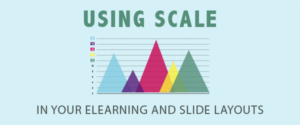
Use the design principle of scale to provide a focal point in your layout. This shows what is most important in your message.
Using the Think Aloud Protocol to Test Usability of Learning Designs
The think aloud protocol or method is an effective way to discover usability problems with digital learning products.
Six Ways to Use Examples And Nonexamples To Teach Concepts
The best way to help learners form accurate concepts is to provide examples and nonexamples. Here are 6 ways to do that.