
In learning, long-term memory is the ultimate destination. Here’s what you should know about how we encode, store and retrieve memories.
Emotions and Learning Part III
10 Ways To Design For Emotions
Learn how to generate connections to your audience for online learning or eLearning through emotional design.
Emotions and Learning: Part II
How Emotions Affect Learning
Dive in and see how emotions affect various aspects of learning, like perception, motivation and memory.
Emotions And Learning: Part I
Emotion and Cognition
Appealing to the emotions is one of the keys to motivating people, attracting their attention and facilitating memory.
How To Write Analogies To Enhance Learning
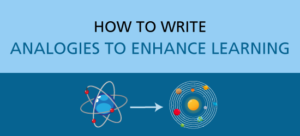
Effective analogies for learning use a familiar concept to understand a new concept. Review the guidelines teaching with analogies.
Characteristics of Adult Learners
Adult Learning Principles
Adults bring unique characteristics to the learning experience. Malcolm Knowles developed and revised adult learning principles.
The Novice Brain: Characteristics of the Novice Learner
To help people move from a novice to someone with expertise, you need to understand the characteristics of the novice learner.
The Power of Retrieval Practice For Learning
An Instructional Strategy for Long-term Retention
Retrieval practice is one of the best instructional strategies to use when learners are required to memorize things like procedures, product details, and technical information.
8 Principles on Cognitive Load and Collaborative Learning
Seen through the lens of cognitive load, there are three aspects of collaborative learning to consider during design: the learning task, the individual learners and the group.
Can you read the minds of your learners?
An updated look at schemas and learning
New knowledge builds on existing knowledge. If you understand the schemas (knowledge structures) of your audience, your training will be more effective.
What is cognitive load?
What makes learning difficult? How can we improve learning design? One way is to use strategies that reduce cognitive load. Find out more about this theory.
Working Memory: 20 Facts You Must Know
What is working memory?
Working memory is the equivalent of being mentally online. Working memory is where we manipulate information in the moment.